The Ministry of Municipality and Housing has announced the completion of its operational and field plans for this year’s rainy season. These plans were implemented through an integrated system by municipalities across various regions of the Kingdom, aiming to enhance public safety, ensure the smooth delivery of municipal services, minimize rain-related damages, raise community awareness, and strengthen communication with residents.
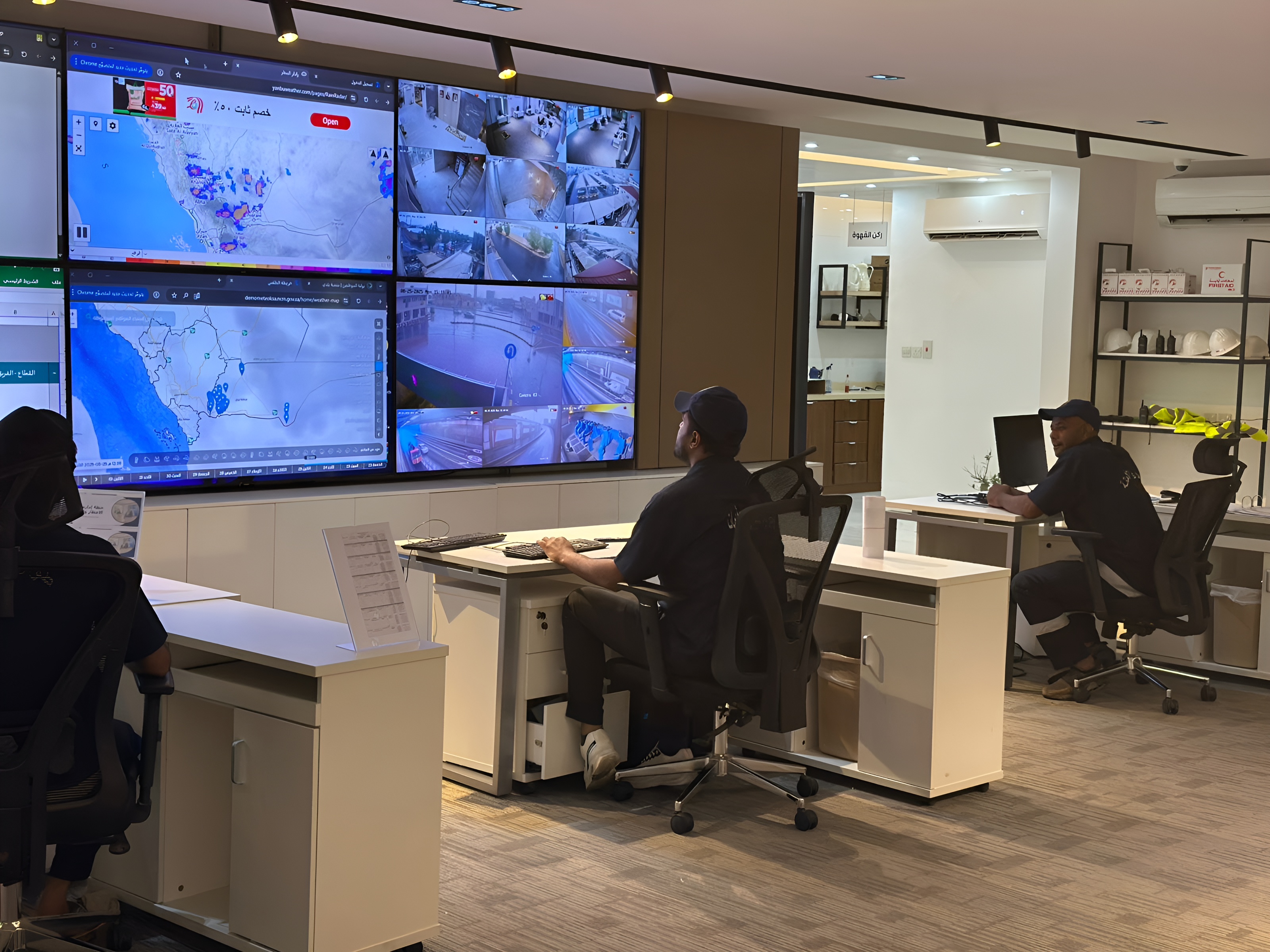
The Ministry clarified that municipalities have activated 24/7 operations and emergency rooms, in direct coordination with the National Call Center and relevant entities, to monitor and respond promptly to incoming reports. Field teams, machinery, and equipment have been mobilized to address water accumulation sites and flood pathways, alongside conducting preventive maintenance for drainage networks, culverts, and bridges.
Preparations also included the execution of specialized projects to address critical points, the construction and expansion of new drainage networks and channels, and the enhancement of existing stations—some of which now exceed a capacity of 18,000 liters per second. These efforts have contributed to reducing the number of critical sites from over 600 in 2022 to fewer than 300 in 2025, reflecting the advancement of sustainable solutions and the effectiveness of implemented projects.
The Ministry emphasized that municipalities have strengthened their human and mechanical readiness by deploying tens of thousands of field and technical personnel, and operating thousands of diverse equipment units across vital locations under flexible rapid-response plans. Additionally, simulation drills and hypothetical scenarios for rain and flood events were conducted to improve response capabilities and train teams in handling emergencies.
The plans also promoted digital integration through the use of advanced national platforms for real-time monitoring of rainfall and reports, such as “Ajwaa,” “Emerge,” and “Flow Map,” ensuring swift decision-making and enhanced response efficiency.
Moreover, the municipalities’ efforts extended beyond addressing the effects of rain and floods to include health and environmental aspects. Preventive programs were implemented to combat water stagnation and disease-carrying insects, ensuring a safe and sustainable urban environment. These efforts were carried out in coordination with the General Directorate of Civil Defense, the General Traffic Department, service companies, and security and health authorities, guaranteeing the continuity of municipal services under various weather conditions.
The Ministry called on citizens and residents to cooperate by promptly reporting water accumulations and observations via the unified number (940) and the “Balady” platform, affirming that these efforts are part of enhancing community readiness and raising public safety awareness.
It is worth noting that the Ministry continues its role in developing infrastructure to address climate change. In 2024 alone, over 454,000 linear meters of rainwater drainage networks were implemented, compared to 291,000 meters in 2023—a growth rate of 5.8%. The total length of networks executed since the launch of its projects has now exceeded 8 million linear meter