

Ministry of Municipality and Housing Approves Regulations for Offering Tobacco Products
The Ministry of Municipality and Housing has approved municipal regulations for offering tobacco products, aiming to organize related activities, ensure compliance with safety and quality standards, and reduce the harms of secondhand smoke on non-smokers. The ministry clarified that the regulations are structured around four main pillars: licensing requirements, spatial requirements, technical requirements, and operational requirements. These apply to establishments licensed to offer tobacco products that meet Saudi standards. Licensing requirements stipulate that procedures for issuing, renewing, modifying, suspending, and canceling licenses must follow the Municipal Licensing Procedures System and its executive regulations, with a valid commercial license required for the primary activity. Spatial requirements include seven key elements related to urban boundaries within and outside cities, prohibited zones, minimum distances between activity sites and mosques or educational facilities, as well as requirements for parking, permitted building heights, greenery ratios, and coverage. Additionally, each municipality may set specific conditions regarding the minimum street width allowed for such activities. The regulations strictly prohibit the use of logos or promotional images related to tobacco products on external signage, limiting signage to information about the primary activity. Technical requirements cover ventilation standards, storage areas for tobacco supplies, service halls, tobacco preparation areas, and charcoal burners, along with safety and security conditions. The ministry emphasized the need to document approved suppliers of tobacco products and accessories in a traceable system for inspection purposes. It also prohibits the sale or offering of these products to individuals under 18 years of age, or as defined by the Anti-Smoking Law. The full guide to the regulations for offering tobacco products is available at: https://momah.gov.sa/sites/default/files/2025-05/ashtratat%20tqdym%20mntjat%20altbgh.pdf
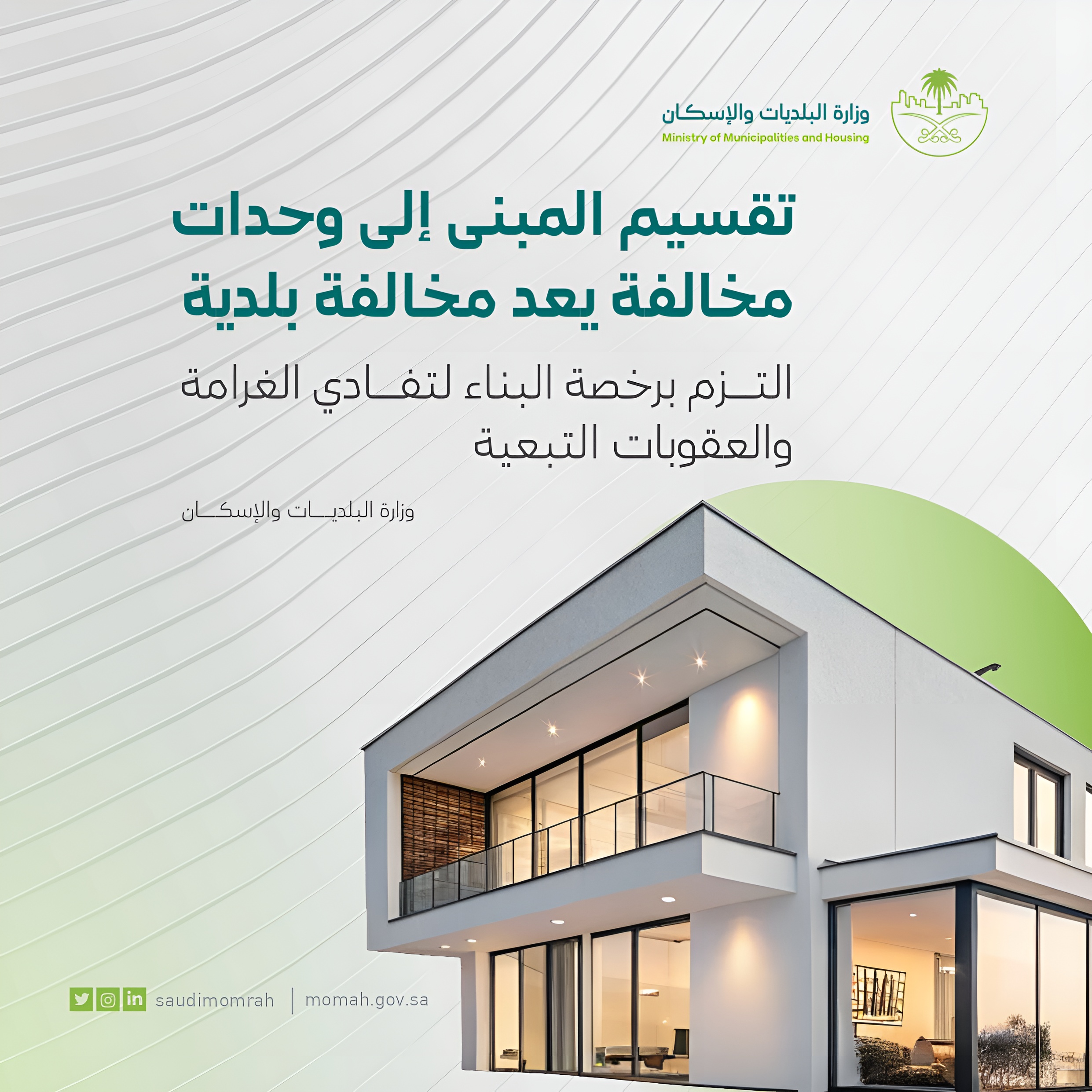
The Ministry of Municipality and Housing has approved updates to the Municipal Violations Penalty Regulations, adding a new violation related to dividing buildings into units that do not comply with the original building permit. This move is part of the ministry’s efforts to regulate the urban environment, ensure structural safety, and enforce compliance with approved municipal systems and licenses. The ministry clarified that penalties include a financial fine ranging from SAR 5,000 to SAR 25,000 per unauthorized unit, with violators required to remove the violation at their own expense. In cases where removal is structurally unfeasible due to potential risks to the building’s integrity, the violator must pay half the construction cost of the offending unit, correct the violation, and mitigate any damage. A certified engineering office approved by the ministry must issue a safety certificate for the affected structure. The ministry noted that such practices negatively impact the urban fabric of cities, cause disruptive increases in population density, and directly affect essential services and parking availability in surrounding streets. Violators are granted a 60-day grace period to rectify the situation after being notified of the violation, in accordance with official procedures designed to address infractions without compromising building safety or resident well-being. The ministry emphasized the urgency of correcting unauthorized building divisions to avoid penalties. The updated regulations aim to curb unauthorized practices involving the division of buildings or residential units without the necessary permits. This contributes to improving the urban environment, reducing harm to residents, and ensuring construction quality and structural safety. These updates are part of the ministry’s ongoing efforts to enhance municipal and regulatory systems, raise compliance levels, and improve the urban landscape in cities. The ministry urges property owners and investors to adhere to regulations before undertaking any division or modification of buildings.

The Ministry of Municipality and Housing has approved updated regulations for the use of public sidewalks, aiming to organize commercial utilization of spaces adjacent to shops, restaurants, and cafés. This initiative seeks to ensure smooth pedestrian flow and enhance the urban appeal of cities. The new regulations aim to strike a balance between commercial investment needs and the rights of road users by providing a safe urban environment that boosts street vitality without compromising pedestrian safety or obstructing movement. They offer a structured framework that allows commercial activities to benefit from sidewalk spaces within clearly defined boundaries, while preserving sidewalks’ primary role as open pathways accessible to all. This approach reflects the ministry’s vision to develop public spaces in a way that preserves architectural identity and gives cities a more modern character. The regulations set precise standards for usage formats and boundaries, including the layout of outdoor seating, specifications for umbrellas, barriers, and decorative plants that enhance the aesthetic value of the space. The regulations are based on key principles, most notably ensuring safe pedestrian passage, reducing visual clutter, and providing a clean and organized environment that accommodates both visitors and business owners. The ministry clarified that permits will be issued electronically via the “Balady” platform, streamlining procedures and offering investors full transparency regarding application steps and regulatory requirements. The full guide to sidewalk use regulations is available at: https://momah.gov.sa/sites/default/files/2025-08/ashtratat%20tsryh%20ashghal%20rsyf%20m%60tmd.pdf These regulations mark a new milestone in the ministry’s efforts to develop cities, enhance their vibrancy, and organize commercial activities—contributing to a more beautiful and well-structured urban environment and reinforcing the appeal of Saudi cities as attractive destinations for investment and everyday life.
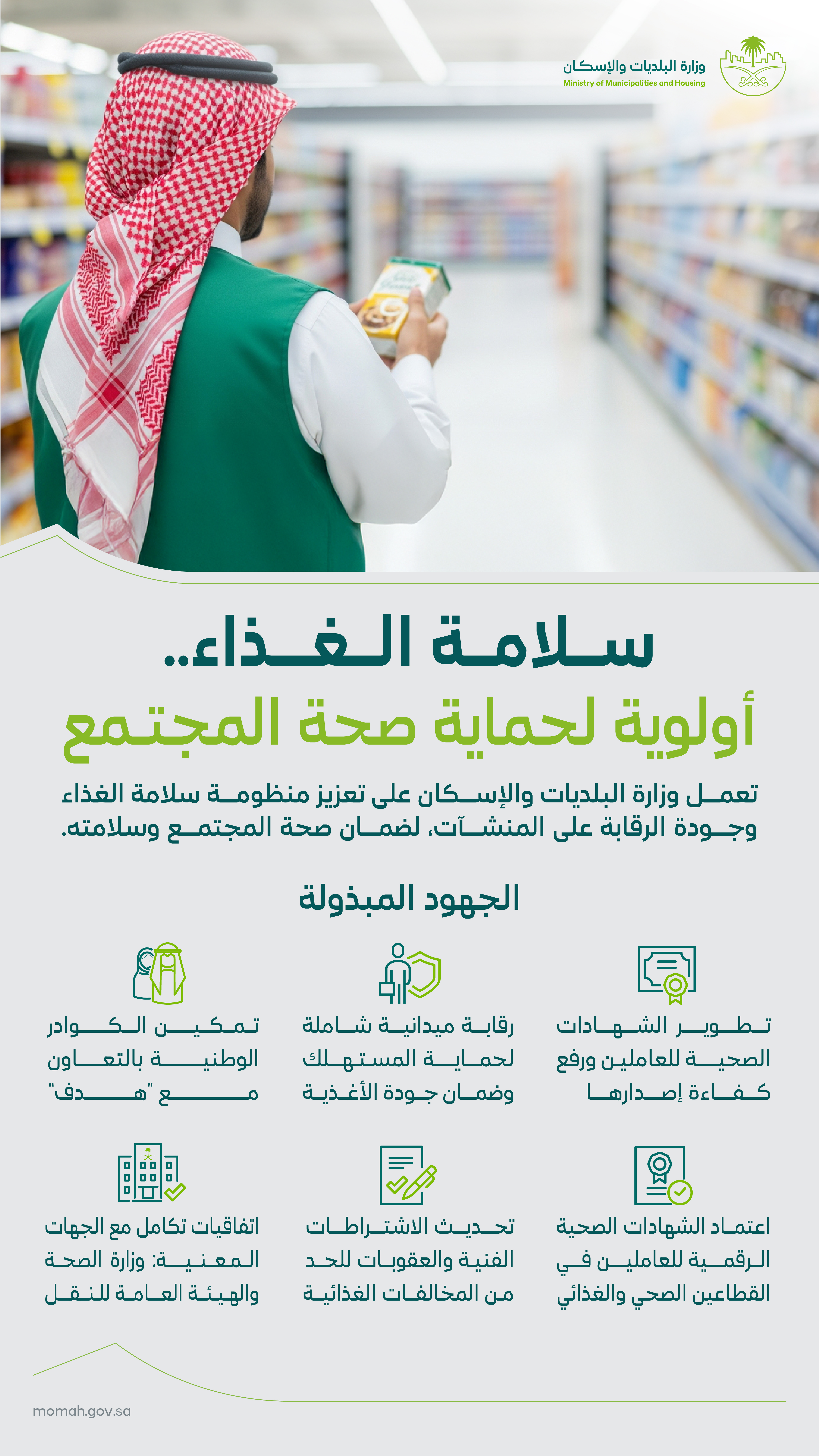
The Ministry of Municipality and Housing has reaffirmed its ongoing efforts to enhance food safety and improve health inspection efficiency across food establishments throughout the Kingdom. These efforts align with the ministry’s mission to uphold the highest standards of public health and quality of life, and support the goals of Saudi Vision 2030 in building healthy and sustainable cities. The announcement coincides with World Food Day, observed annually on October 16. As part of its digital transformation and drive to improve regulatory efficiency, the ministry has developed a comprehensive health certification system for workers in food-related activities such as restaurants, cafés, and central kitchens, as well as in public health sectors including barbershops, women’s salons, laundries, and wellness centers. In 2024 alone, the ministry issued over 1.2 million health certificates. It also updated the health certificate requirements guide to streamline procedures and unify licensing standards. In coordination with the Ministry of Health, the ministry standardized medical examinations for residency and health certification for expatriate workers. Additionally, a joint initiative was launched with the Human Resources Development Fund (HRDF) to support health certification for Saudi workers. Municipalities and local authorities conduct daily inspection rounds of food establishments, with more than 2,000 health inspectors operating in morning and evening shifts to ensure food safety and service quality. In the past year, over 2.5 million inspections were carried out across approximately 1.5 million establishments employing more than 2 million workers. These inspections resulted in 555,000 violations, the closure of 34,700 establishments, and the issuance of 635,000 regulatory fines. The ministry continues to enhance field monitoring mechanisms by increasing the number of inspectors and intensifying inspection campaigns to raise food safety standards and ensure regulatory compliance. The ministry has also approved updated requirements for food sectors including restaurants, cafés, and central kitchens, aimed at improving hygiene standards and public health compliance while boosting customer satisfaction. A revised penalty schedule for food violations was introduced following a thorough legal review to ensure fairness and adherence. Furthermore, more effective regulatory and legislative mechanisms have been developed to reduce violations and foster a safer food environment. The Ministry of Municipality and Housing emphasized that its participation in World Food Day stems from its responsibility to protect consumers and ensure the safety of food served across the Kingdom. This is achieved through an integrated regulatory and oversight system supported by modern technologies and qualified personnel, contributing to national food security, public health, and improved quality of life—reflecting the synergy among government sectors to build safer, healthier, and more sustainable cities.

The Ministry of Municipality and Housing has approved regulatory requirements for tobacco product retail stores, aiming to promote public health, ensure compliance with relevant regulations, and establish a safe and orderly commercial environment across cities in the Kingdom. The ministry clarified that the requirements apply to all stores selling tobacco products and accessories, including cigarettes, shisha, and electronic cigarettes. To obtain a license, applicants must present a valid commercial registration, secure approval from Civil Defense, and fully comply with the Municipal Licensing Procedures System and its executive regulations. The requirements include spatial conditions, most notably that the store must be located within a commercial building inside the urban boundary and at least 500 meters away from mosques and schools. The minimum store area is set at 36 square meters, with additional conditions determined by each municipality based on street width and site classification. Investors are also required to meet technical and architectural standards, including facade designs aligned with the Urban Code or Saudi architectural design guidelines, accessible ramps for people with disabilities, installation of alarm and fire suppression systems, and adherence to the Saudi Building Code for ventilation, air conditioning, lighting, and fire prevention. The ministry emphasized the importance of complying with technical standards outlined in the regulatory guide, which prohibit mixing or repackaging products or selling them in unauthorized packaging. Stores must verify product suppliers, refrain from selling tobacco products to individuals under 18, avoid using public sidewalks beyond store boundaries, install internal and external surveillance cameras, maintain general cleanliness, dispose of waste safely, and offer electronic payment options. The ministry also stressed the need to display warning signs inside stores with educational messages about the harms of smoking, along with a QR code linked to license data and regulatory authorities to ensure transparency and ease of verification. The regulations prohibit promoting tobacco products or offering them as rewards or free samples, and ban the sale of single cigarettes or products that do not meet standards approved by the Food and Drug Authority. Municipal authorities will monitor the implementation of these requirements on the ground and apply penalties to violating establishments, as part of efforts to enhance oversight, improve operational efficiency, and ensure compliance with approved regulations—ultimately contributing to a more disciplined and high-quality urban environment.
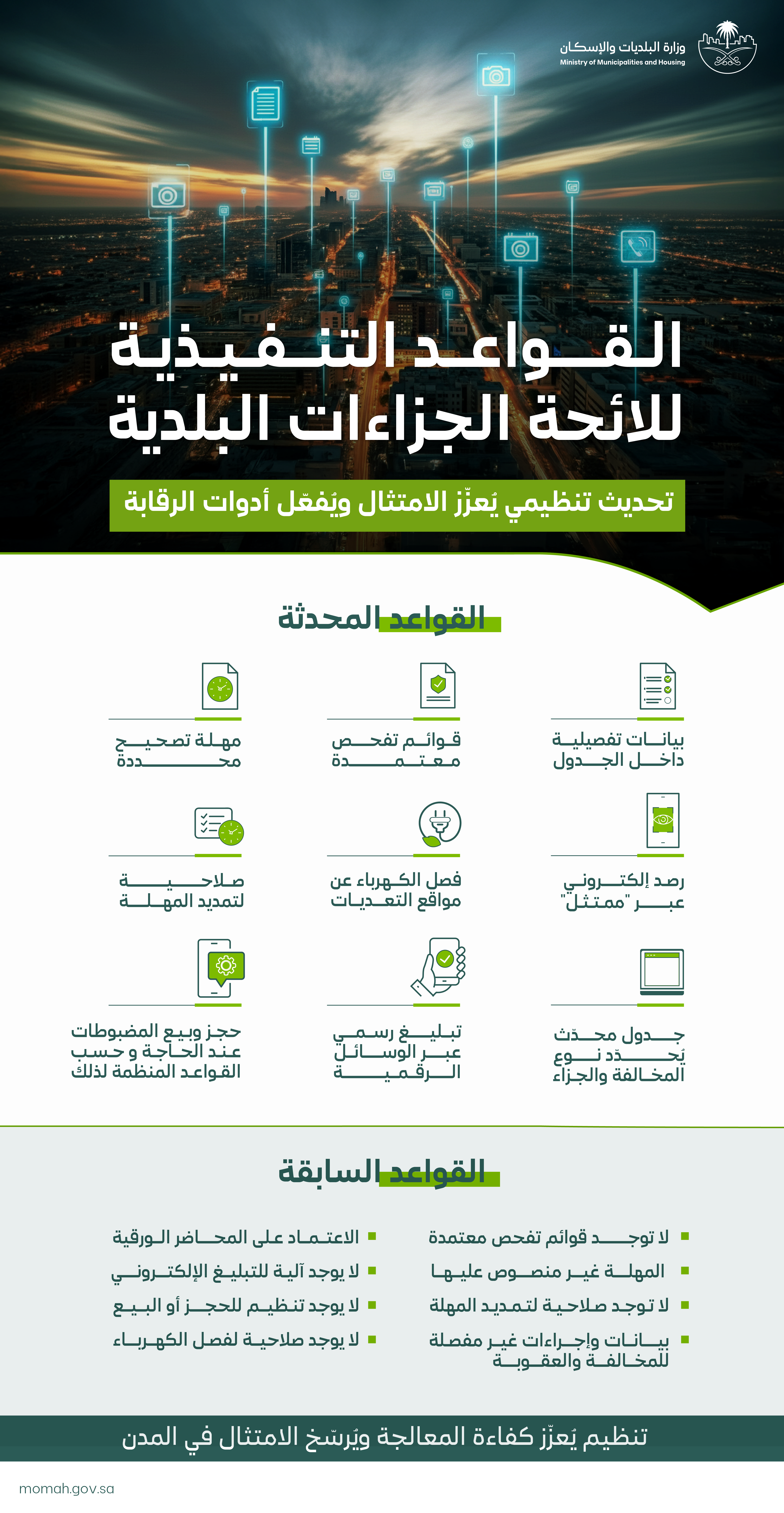
The Ministry of Municipality and Housing has approved the updated executive rules for the Municipal Violations Penalty Regulations, establishing a unified regulatory framework for applying municipal penalties and refining mechanisms for monitoring, assessment, and fines. This initiative aims to enhance compliance efficiency across cities in the Kingdom. The ministry stated that the updated rules classify violations into major and minor categories, assigning appropriate penalties to each, including financial fines, temporary closures, and license revocations. A system of automatic escalation is applied for repeated offenses. Fines may reach up to 2 million SAR for certain major violations and up to 1 million SAR for others. Penalties are calculated based on the type of violation, the classification of the municipality, and the size of the establishment. Offenders of minor violations are granted a grace period to rectify their status before penalties are imposed. The updated rules stipulate that violations must be monitored and recorded electronically via the “Mumtathil” and “Efaa” platforms to ensure swift action, accurate documentation, and transparent processing. The rules also empower municipalities to impound vehicles or equipment left in public spaces and sell them through public auctions. Additionally, they authorize disconnection of electricity services from sites that fail to address major violations in accordance with the established regulations. This approval is part of the ministry’s broader efforts to advance the municipal oversight system, improve compliance efficiency, enhance quality of life, and protect public facilities, in alignment with the goals of Saudi Vision 2030. The full executive rules for the Municipal Violations Penalty Regulations can be accessed at: https://momah.gov.sa/sites/default/files/2025-08/alqwa%60d%20altnfydhyt.pdf
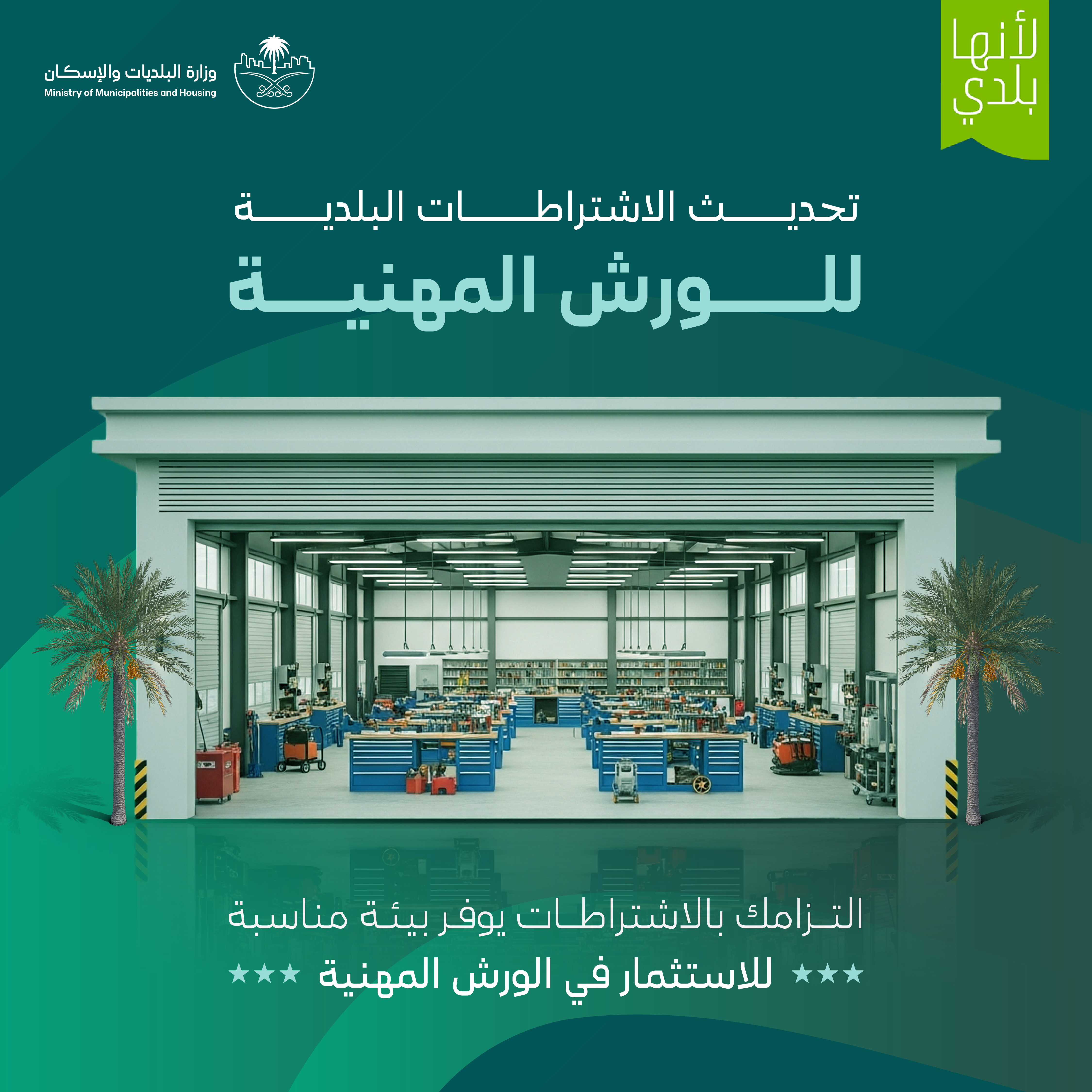
Ministry of Municipality and Housing Updates Requirements for Professional Workshops
The Ministry of Municipality and Housing has announced updated municipal requirements for professional workshop activities, aiming to regulate these services to meet citizens’ needs and improve service quality in accordance with global safety standards. The updated requirements apply exclusively to repair and maintenance activities and do not cover the sale or marketing of materials and products. The revised requirements include spatial criteria such as location, development specifications, facades, and the overall appearance of the workshop. They also cover construction standards, including flooring, interior walls, ceilings, stairs, external sidewalks, accessibility ramps, ventilation, air conditioning, lighting systems, and electrical installations. Fire protection requirements mandate compliance with the Saudi Fire Protection Code. Waste management, site cleanliness, and worker-related conditions fall under health-related operational requirements. Technical operational requirements include general operating standards, maintenance protocols, and specific requirements for servicing electronic devices, installations, display units, and internal workshop signage. The ministry emphasized that these updates reflect the Kingdom of Saudi Arabia’s ongoing development under Vision 2030 and address essential citizen needs. The revisions are based on internationally recognized standards. The full requirements for professional workshops can be accessed via the following link: (link)

The Ministry of Municipality and Housing has announced the release of an updated list of technical and regulatory requirements for car rental offices and vehicle shelter centers. This initiative is part of the Ministry’s strategic efforts to regulate this vital sector and stimulate investment, contributing to the development of the urban landscape and enhancing quality of life in Saudi cities. The updated requirements cover designated locations for renting land, sea, and air transport vehicles, including rental offices, shelter centers, and their associated facilities. These standards were developed in line with global best practices and in coordination with relevant authorities, ensuring a balance between investor needs and beneficiary rights, while taking into account planning, architectural, technical, and operational aspects. The new regulations include precise controls related to activity locations, architectural design standards, façade requirements, designated parking spaces, public safety, cleanliness and maintenance protocols, accessibility for persons with disabilities, and compliance with the Saudi Building Code, Fire Protection Code, and all relevant regulations. They also address the organization of complementary and compatible activities, the provision of electronic payment methods, installation of surveillance cameras, and the placement of clear and updated internal signage. This update builds on the Ministry’s ongoing efforts to promote a culture of compliance and simplify adherence procedures through modern digital tools such as the “Balady” platform. These efforts aim to create an integrated urban environment that reduces visual clutter, alleviates traffic congestion, and improves the efficiency of public facility usage. The Ministry emphasized that compliance with the updated requirements opens broad opportunities for investors to establish facilities aligned with the Kingdom’s developmental transformations, offering high-quality services that enhance market competitiveness, improve user experience, and support the local economy. The updated list of requirements for vehicle rental offices and shelter centers is available on the Ministry’s official website for those interested, via the following link: https://momah.gov.sa/sites/default/files/2025-03/ashtratat%20mkatb%20ta%27jyr%20wsay%27l%20alnql.pdf. It is worth noting that the Ministry has recently updated a range of municipal requirements for various commercial and service activities, aiming to enhance infrastructure efficiency, improve building and facility safety, elevate the urban landscape, provide a safe and healthy environment, facilitate business operations, and empower investors to deliver high-quality services that meet community aspirations and support the national economy
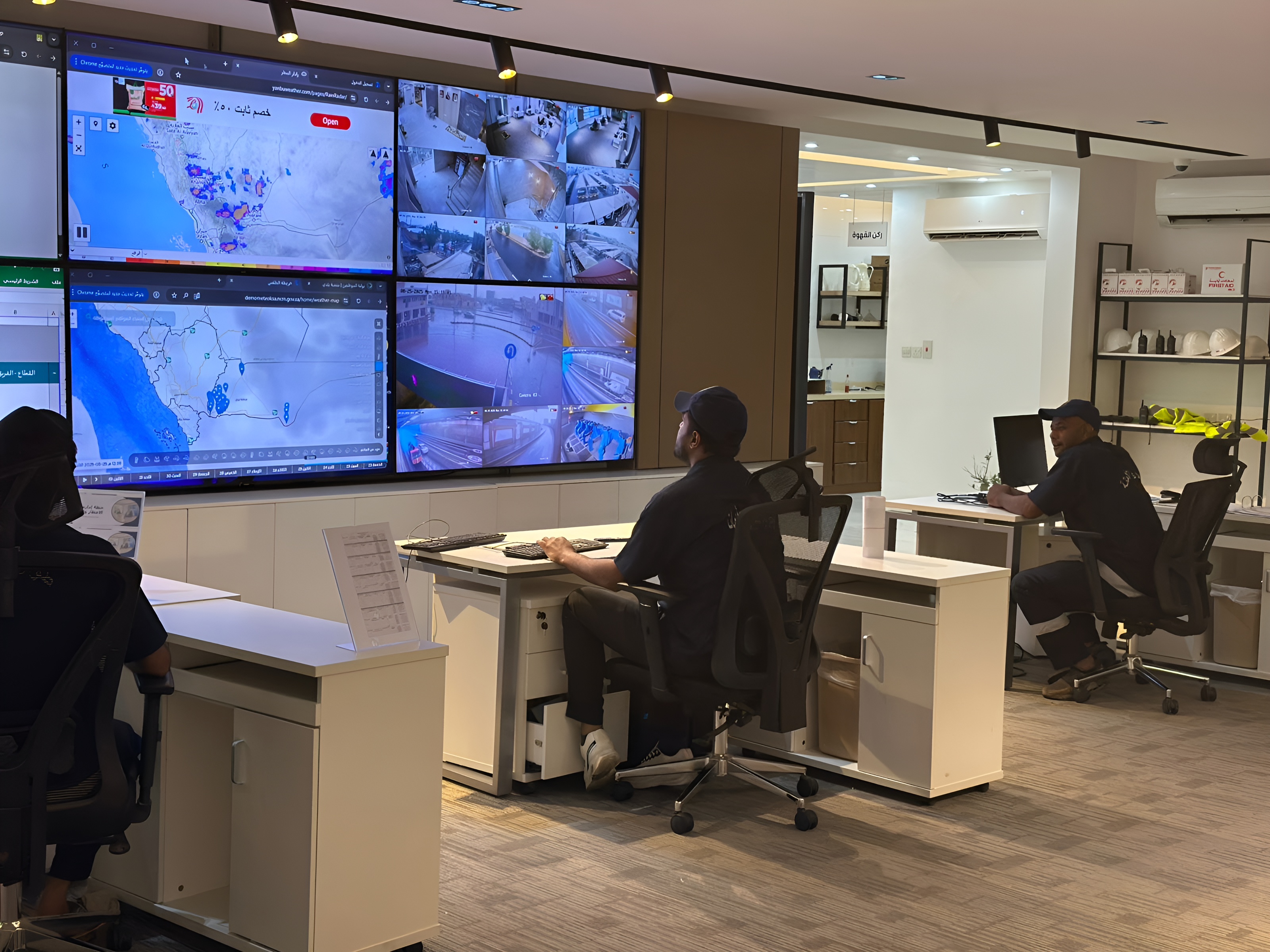
The Ministry of Municipality and Housing has announced the completion of its operational and field plans for this year’s rainy season. These plans were implemented through an integrated system by municipalities across various regions of the Kingdom, aiming to enhance public safety, ensure the smooth delivery of municipal services, minimize rain-related damages, raise community awareness, and strengthen communication with residents. The Ministry clarified that municipalities have activated 24/7 operations and emergency rooms, in direct coordination with the National Call Center and relevant entities, to monitor and respond promptly to incoming reports. Field teams, machinery, and equipment have been mobilized to address water accumulation sites and flood pathways, alongside conducting preventive maintenance for drainage networks, culverts, and bridges. Preparations also included the execution of specialized projects to address critical points, the construction and expansion of new drainage networks and channels, and the enhancement of existing stations—some of which now exceed a capacity of 18,000 liters per second. These efforts have contributed to reducing the number of critical sites from over 600 in 2022 to fewer than 300 in 2025, reflecting the advancement of sustainable solutions and the effectiveness of implemented projects. The Ministry emphasized that municipalities have strengthened their human and mechanical readiness by deploying tens of thousands of field and technical personnel, and operating thousands of diverse equipment units across vital locations under flexible rapid-response plans. Additionally, simulation drills and hypothetical scenarios for rain and flood events were conducted to improve response capabilities and train teams in handling emergencies. The plans also promoted digital integration through the use of advanced national platforms for real-time monitoring of rainfall and reports, such as “Ajwaa,” “Emerge,” and “Flow Map,” ensuring swift decision-making and enhanced response efficiency. Moreover, the municipalities’ efforts extended beyond addressing the effects of rain and floods to include health and environmental aspects. Preventive programs were implemented to combat water stagnation and disease-carrying insects, ensuring a safe and sustainable urban environment. These efforts were carried out in coordination with the General Directorate of Civil Defense, the General Traffic Department, service companies, and security and health authorities, guaranteeing the continuity of municipal services under various weather conditions. The Ministry called on citizens and residents to cooperate by promptly reporting water accumulations and observations via the unified number (940) and the “Balady” platform, affirming that these efforts are part of enhancing community readiness and raising public safety awareness. It is worth noting that the Ministry continues its role in developing infrastructure to address climate change. In 2024 alone, over 454,000 linear meters of rainwater drainage networks were implemented, compared to 291,000 meters in 2023—a growth rate of 5.8%. The total length of networks executed since the launch of its projects has now exceeded 8 million linear meter
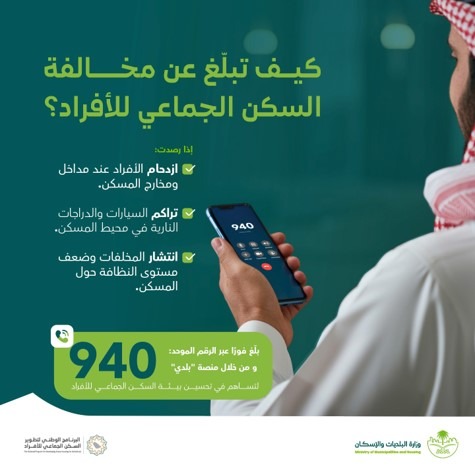
Municipalities and Housing Urge Reporting of Group Housing Violations via "Balady" and 940
The Ministry of Municipality and Housing has called on members of the community to report violations related to group housing for individuals through the "Balady" platform or by calling the unified number (940). The ministry emphasized that reporting such violations contributes to enhancing safety, public health, and improving the quality of life in residential neighborhoods. The ministry explained that this initiative is part of a comprehensive plan aimed at raising awareness about the importance of adhering to approved health and technical requirements in group housing. This helps limit irregular practices, ensures the safety of residents, and promotes compliance with municipal regulations. It reaffirmed its ongoing monitoring efforts in cooperation with relevant authorities, noting that private sector establishments have a shared responsibility to provide suitable housing environments for workers. This supports sustainable urban development and aligns with the goals of Saudi Vision 2030 to improve quality of life. Recently, the ministry launched an updated version of the health, technical, and safety requirements guide for group housing for individuals. This effort aims to regulate this type of housing and standardize its controls, contributing to the creation of safe and healthy living environments that meet residents’ needs and support quality of life across cities in the Kingdom. It is worth noting that the Ministry of Municipality and Housing leads the National Program for the Development of Group Housing for Individuals, which includes several government entities such as: the Ministry of Interior, Ministry of Health, Ministry of Human Resources and Social Development, Ministry of Commerce, Ministry of Industry and Mineral Resources, the Royal Commission for Jubail and Yanbu, the Saudi Authority for Industrial Cities and Technology Zones, the Economic Cities and Special Zones Authority, and the Public Health Authority "Weqaya".

The National Program for the Development of Collective Housing for Individuals has called on all establishments that employ 20 workers or more to obtain a group housing license through the “Balady” platform, noting that the licensing procedures are fully electronic and simplified, in line with the requirements, conditions, and guidelines published on the platform. In a press statement today, the Program explained that issuing the license and complying with its regulations contributes to improving the quality of worker housing, providing them with a suitable and healthy environment, and enhancing overall quality of life in these accommodations, while also strengthening compliance with municipal requirements. The Program emphasized that establishments failing to obtain the license will expose themselves to statutory violations outlined in the Guideline for Control Procedures on Collective Accommodation for Individuals, in addition to being barred from accessing certain government services—such as expanding visa quotas and transferring workers via the “Qiwa” platform. It further noted that field inspections will be conducted to monitor and verify establishments’ compliance with licensing and regulatory requirements, as part of its efforts to regulate and develop a suitable residential environment for workers, improve the urban landscape, and support quality-of-life objectives. The Program is chaired by the Ministry of Municipalities and Housing and includes the membership of the following entities: the Ministry of Interior, Ministry of Health, Ministry of Human Resources and Social Development, Ministry of Commerce, Ministry of Industry and Mineral Resources, Royal Commission for Jubail and Yanbu, Saudi Authority for Industrial Cities and Technology Zones (MODON), Economic Cities and Special Zones Authority, and the Public Health Authority “Weqaya.” The Program aims to enhance the system of collective housing and provide suitable residential environments for workers in the Kingdom, in line with the objectives of the Quality of Life Program—one of Vision 2030’s key programs.

MOMAH Updates Regulatory Requirements for the Veterinary Care Sector
The Ministry of Municipalities and Housing has updated the regulatory requirements for the veterinary care sector, with the aim of improving the quality of services provided in veterinary facilities, enhancing public health, and balancing operational and safety requirements, while also stimulating the investment environment. The Ministry explained that the updated requirements apply to all veterinary facilities, including hospitals, clinics, laboratories, pharmacies, shelters, and training centers, and specify clear standards for site selection, size, design, equipment, and operational procedures, in line with public health requirements and the urban fabric. The Ministry emphasized the necessity of maintaining a valid commercial registration and securing approvals from the Ministry of Environment, Water, and Agriculture, as well as Civil Defense, while adhering to spatial regulations under the building codes, including setbacks, coverage ratios, parking spaces, and landscaping. The updated requirements also allow additional compatible activities that do not exceed 50% of the facility area, in accordance with set regulations, while ensuring that the facility’s façade aligns with the surrounding urban identity, complies with the Saudi Building Code in utilities, ventilation, and construction materials, and provides accessible entrances for persons with disabilities. The Ministry further stated that the requirements include the installation of surveillance cameras, provision of electronic payment methods, and placement of a QR code on the façade, in addition to compliance with general hygiene requirements and the proper handling of veterinary waste in accordance with approved regulations. The Ministry of Municipalities and Housing stressed that these requirements are mandatory for both existing and new facilities, highlighting that compliance is a prerequisite for continuing operations or renewing licenses, and that violating facilities will be subject to legal action. The updated requirements can be accessed via the following link: https://momah.gov.sa/sites/default/files/2025-04/alashtratat%20albldyt%20llr%60ayt%20albytryt.pdf. These updates form part of the Ministry’s ongoing efforts to raise the efficiency of facilities, improve the quality of specialized services, enhance compliance, and ensure the safety of both animals and the community, in line with the objectives of Vision 2030 to create a well-organized, healthy, and sustainable urban environment.